
Climbing The Cuillin Ridge

The Cuillin ridge on the Isle of Skye in Scotland presents itself as one of the greatest and most challenging mountaineering objectives in the UK. Climbing the ridge will reward you with some of the best scrambling in the UK, climbs up-to S and some absolutely fantastic views. In this article I'll aim to give you an understanding of the route, the logistics to consider and hopefully some inspiration.
What is the Cuillin ridge?
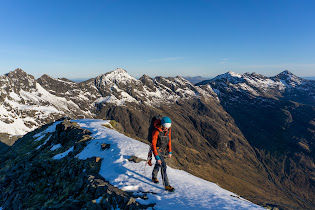
The Cuillin ridge is located on the Isle of Skye. Once a volcano now extinct that erupted around 70 million years ago, predominantly made up from Gabbro, an igneous rock renowned for its Velcro-like qualities even in the wet. Over time the ridge has been carved from the extinct volcano leaving a ridge that runs almost from sea level along the Glen Sligachan.
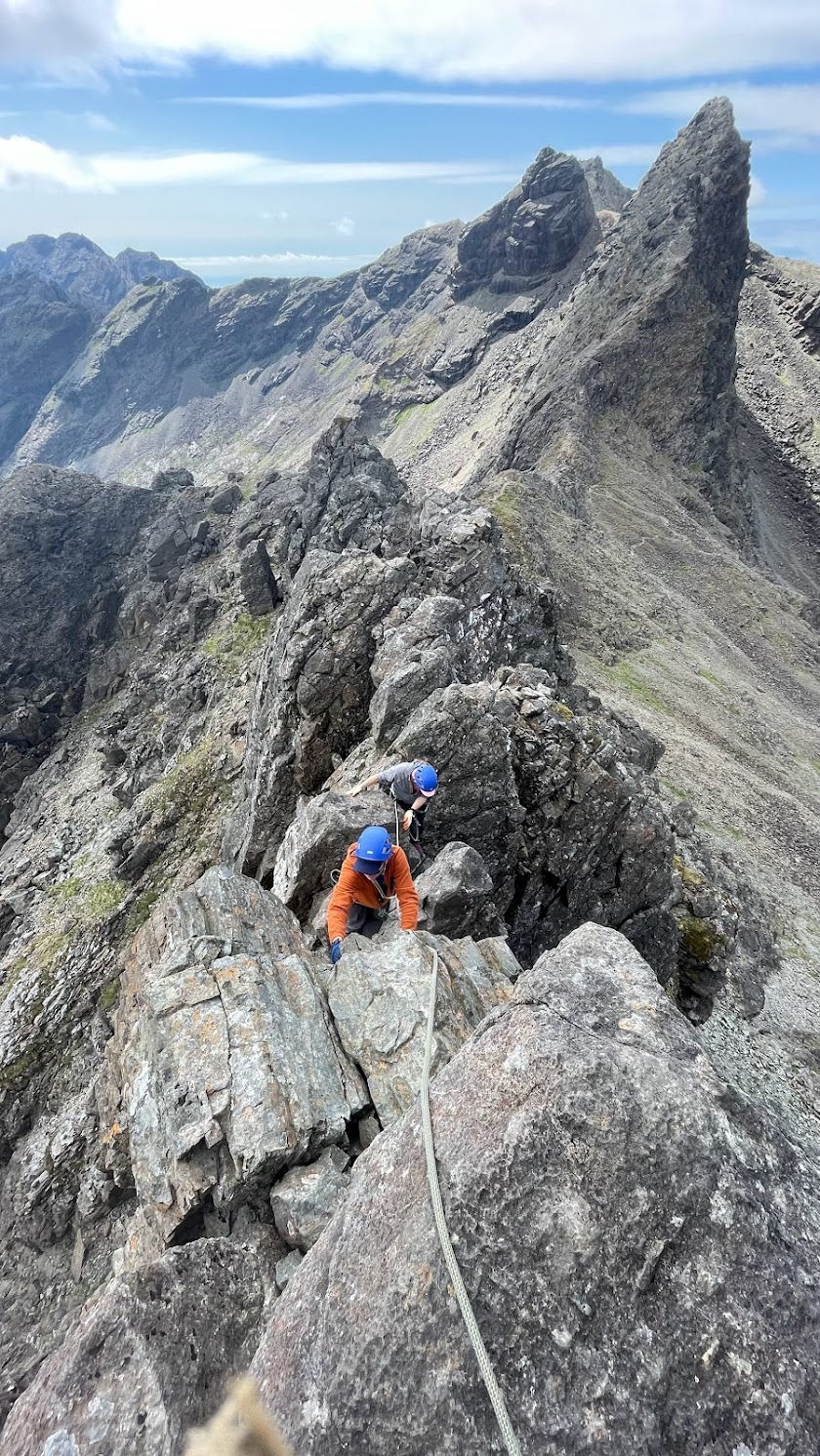
The full traverse involves climbs up-to severe, abseils and lots of exposed scrambling up-to Grade 3. It involves an approach around 6 km either side to reach the ridge. Once you start depending on your chosen route you'll have around 12km of scrambling and climbing with over 3000 m of ascent and descent. If the challenge of the ridge seems like too much the Cuillin is also home to a huge amount of quality rock climb and scrambles, all of which are fantastic days out in their own right.

What is the challenge?
In its simplest form the challenge is to continuously traverse the ridge reaching the summit of Sgurr Na Gillean, how you do this depends on your goals, preparation, partners and the weather. In its purest form you start from Gars-bheinn and end on Sgurr nan Gillean before descending back for a celebratory Pint in the Slighan. How you get from start to finish is open to much variation and there are lots of options depending on your goals and skills.
Undertaking the ridge is no small task but with some preparation and planning any competent mountaineer should be able to complete a successful traverse with a little bit of suffering along the way.

My first Traverse was in 2021, I’d just spent 10 days on Mingulay an island in the outer Hebrides and on the ferry back to the mainland decided, with two friends Andy and Andy that we should attempt the traverse the following day. A quick 4hr drive to Skye, a stressful evening spent packing and a car shuttle in the morning and we were starting the approach around 8 am (too Late). We chose to start from the TD gap and spent the next 10 hrs traversing the ridge, before returning to the slighan. We didn't reach the summit of Gillean having run out of food and water around 4 hours in, dehydrated and tired. We decided to drop down the col after Am Bhastier to the Sligachan. Although we didn't reach the summit, we had a great day out and climbed all the routes on the traverse in the most direct style possible. Our downfall was expecting the route to be much easier than it was and not preparing for a lack of water on the ridge.


How do I prepare?
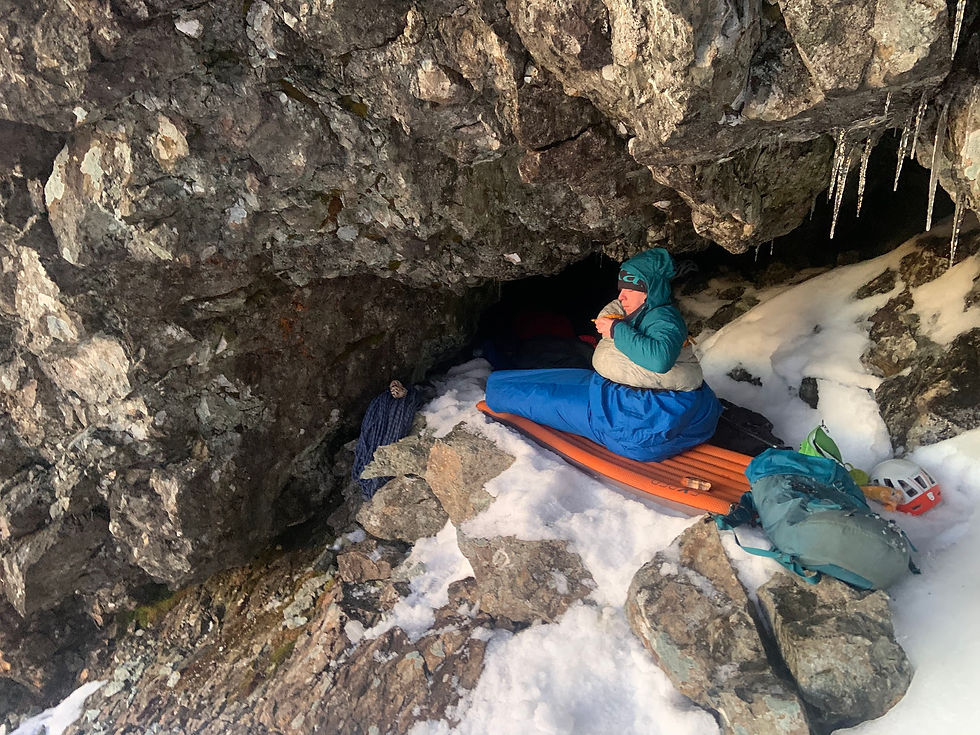
My second full traverse attempt was in winter and this involved a lot more planning and preparation. On the 1st of March Myself and my climbing partner Ben set off at 4am from the car reaching the summit of Sgurr Nan Gillean at sunrise around 7 am. Over the next two days we abseiled climbed, down climbed BIvvies and summited all 11 munros. The success of this traverse was down to the preparation and knowledge gained from the previous attempt, we had more food, more water and a better understanding of the complexities involved in undertaking the ridge in one go.
If you're planning on doing a traverse, prepare as much as possible. Plan to be on the island for at least a week to give yourself enough opportunity to seize a window and to spend some time on the ridge before the traverse to get used to the terrain.

Here's some top tips:
The best way to prepare is to go scrambling and rock climbing as much as possible. Spend time developing the skills needed to competently move around in the mountains. This includes rope work, climbing, scrambling and most importantly route finding. Choose routes that challenge your traditional climbing abilities and your route finding. I've posted a small list of routes that should give you an idea of what to look for.
Get comfortable soloing scrambles, in order to move efficiently across the terrain in a timely manner you'll end up spending lots of time soloing grade 3 ridge terrain that can't be easily protected so you should be comfortable doing this and feel secure with your partner doing this as well.
Get your systems dialled, learn to be efficient not just with rope work but packing and unpacking your bag, knowing where things are in your pack and on your harness. You'll be spending lots of time flaking and coiling rope as well as soloing easier sections of scrambling, getting efficient at gearing up abseiling and putting kit away will save you heaps of time.
Do your research, read forums, ask people questions, buy/borrow guidebooks and read them. If you are planning a traverse, give yourself at least a week with a couple of days to wrecky sections of the ridge and do other climbs on the island first before attempting. Aside from the ridge there's heaps of great climbing and scrambling to do that's often overlooked,
Lastly assume everything is loose, test rocks before putting your weight on them and always push down into the mountain rather than pulling out.
Conditions
The ridge is best done in dry conditions, the rock is its grippiest and the route finding is much easier. I have done traverses in suboptimal conditions but sea clag , and rain make route finding and efficient scrambling much harder, if you're faced with these conditions on the ridge you're probably better off going cragging by the sea.
In general the driest months are May and June and they also tend to be the least midgey but a traverse with a good weather window can be done between April - September.


Equipment List:
40m rope
Small rack wires 3-9 cams green, red, gold
2-3 screw gates
x3 120cm slings on wire gates or screw gates
Helmet
Harness
Belay device
5mts of cord/ Tat
Sleeping bag (two day ascent)
Light sleeping mat (two day ascent)
Stove (two day ascent)
High cal. snacks
Dry camping food (two day ascent)
Water ( learn where you can fill up on the ridge)
Trousers (ideally synthetic)
Merino or synthetic base layer
Minimalist insulation layer (hooded version ideally)
Light waterproof
Light but tough gloves ( leather works well)
Light hat/buff
Practice routes:
Tower ridge- Ben Nevis
Forcan Ridge- Glen Shiel
Pinnacle ridge- Skye
Pearsons nose/ Crib Goch link up.
Cwyfrys Arete- Cadair Idris
Jacks Rake-Pavey Ark
Other routes to do on the cullin:
Climbing:
Arrow Route-Cioch Slabs- VD
Integrity-Cioch -VS 4c
Trophy Crack - Cioch- E1 5b
Jamie Jampot- Elgol- VS 4c
Fertility Right- Elgol- S
Grey Panther- Kilt Rock- E1 5b
Gorbachev- Staffin Slips- E2 5b
Vulcan Wall- Sron na Ciche - HVS 5a
Scrambles:
Pinnacle Ridge- Sgurr nan Gillean
Dubh Slabs
An Stac
Clach Glas/ Blaven Traverse
The Round of Coire Lagan
The Dubh Ridge
Hopefully this article has given you a good idea of the Cuillin ridge and hopefully some inspiration for adventures of your own.
If you need information, please feel free to reach out to me. I've also left some links below where you can find even more info on the ridge.


I recently visited a private fertility clinic in London for consultant-led treatment and had a very positive experience. The initial consultation was thorough, and the consultant took the time to understand what I was hoping to achieve before discussing suitable treatment options. I never felt pressured and was given clear information to consider. The professional and caring approach made the process feel much more comfortable. https://lunafertility.co.uk/